
Last updated November 2, 2026
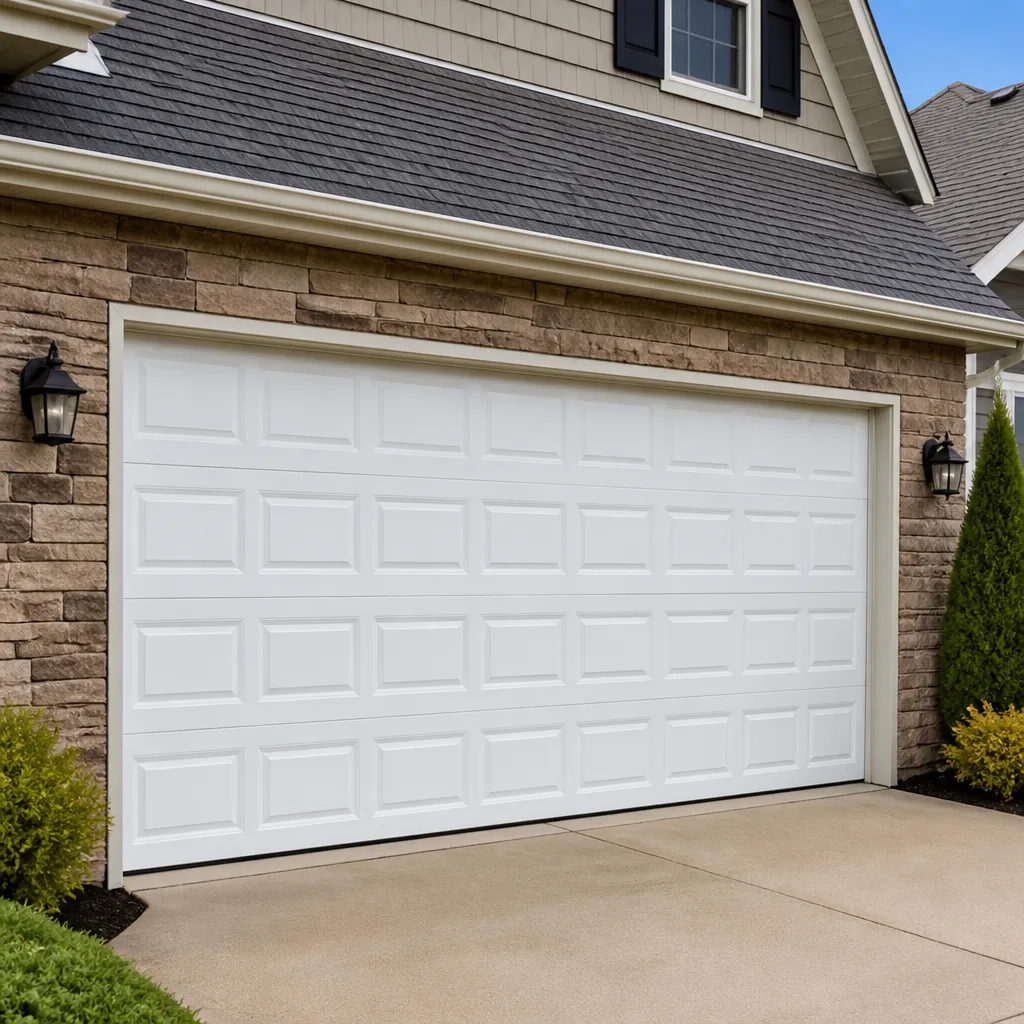 Raised-panel steel
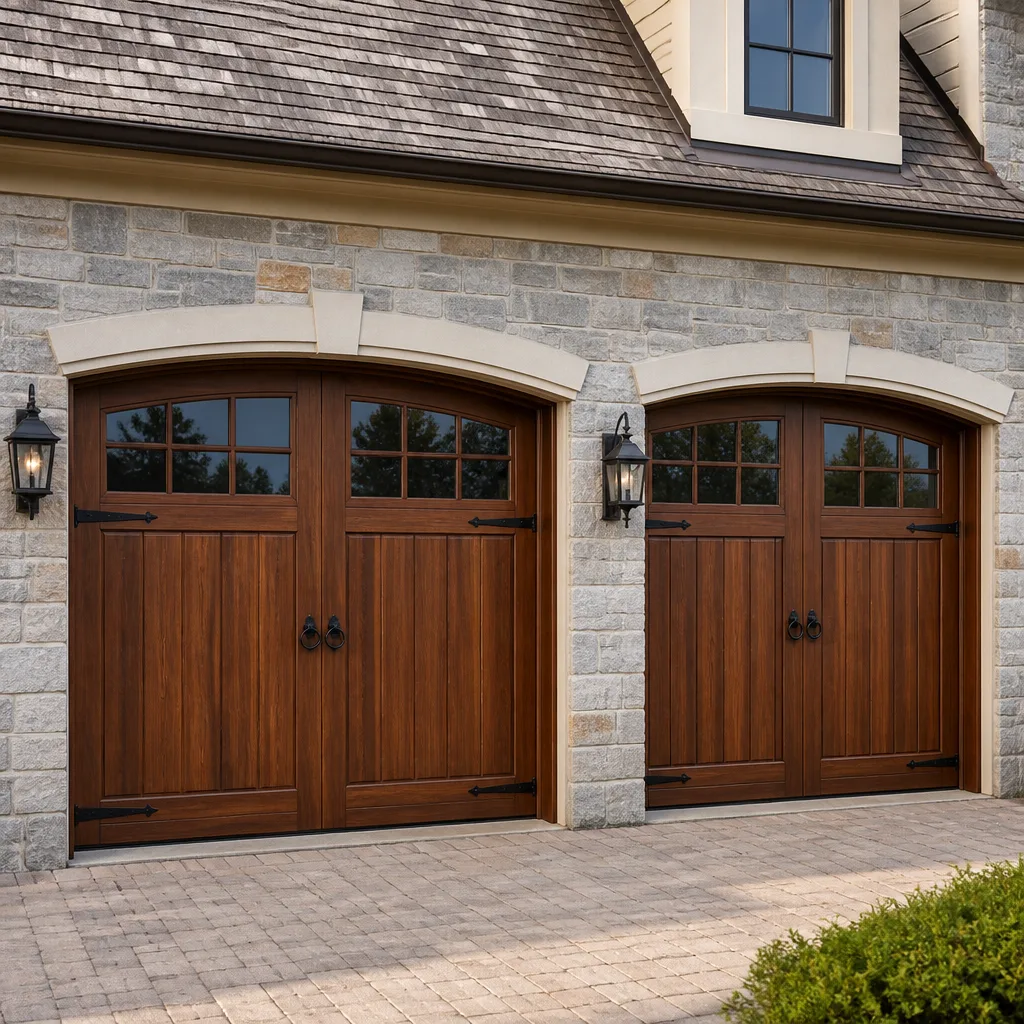 Carriage house
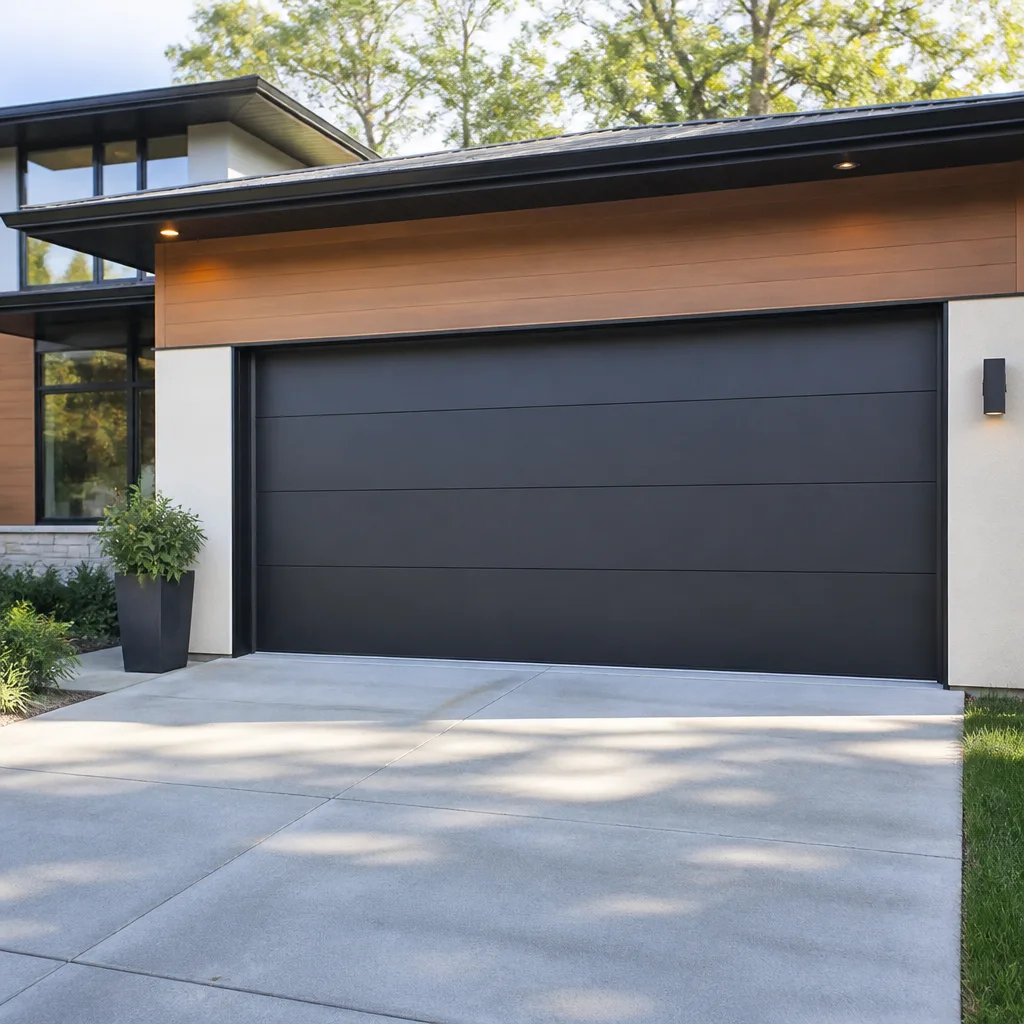 Modern flush
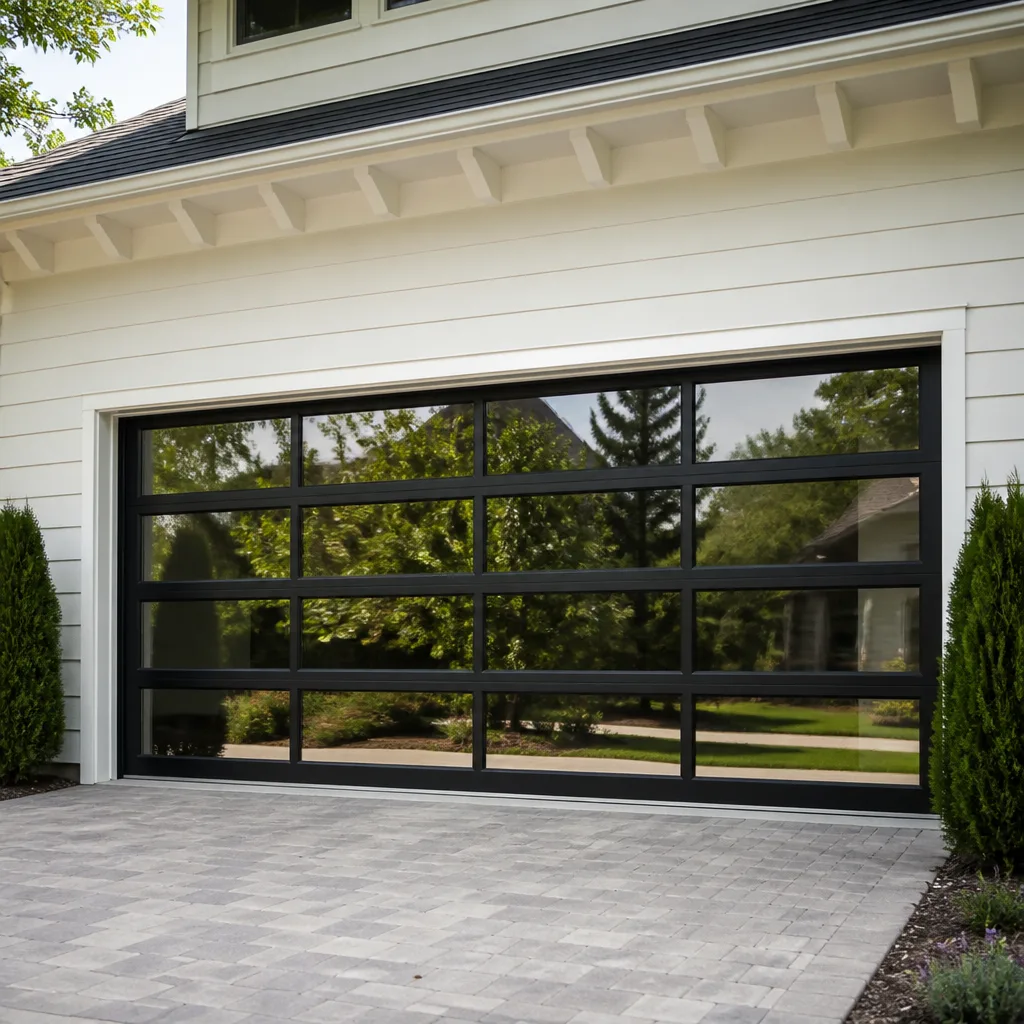 Full-view glass
 LiftMaster openers
 Chamberlain openers
Full 25-point door and opener safety check with every visit - springs, cables, rollers, tracks, and your LiftMaster or Chamberlain opener included
You get a price before we start. It does not change when the truck arrives.
Get your free estimateGarage Door Permits, Codes & Inspections in CA: What You Need to Know
Here is the uncomfortable truth most Eastvale homeowners discover too late: California building code treats a garage door two different ways depending on what, exactly, you are doing to it. Replacing the door panels on the existing track usually needs no permit at all. Replacing the header above the opening, adding a new opener circuit, or converting a carport into a garage all cross into permit territory, and skipping that step creates a record that follows the house. When you sell, California’s real estate disclosure form asks directly about unpermitted work. When you insure, your carrier can deny a claim tied to work that never passed inspection. This guide draws a clean line between the two categories, walks through what Eastvale and Riverside County actually require at the permit counter, and explains what an inspector is really looking for when they sign off. For more guides & resources, see our blog. We work on garage doors in Eastvale daily, and we have watched enough homeowners trip over this to know exactly where the confusion lives.
Quick Answer
Most garage door repairs in California, including spring replacement, panel replacement, opener repair, and same-size door swaps without structural changes, do not require a permit under the California Residential Code. Permits become necessary when the work involves modifying the structural header, changing the opening size, installing a new electrical circuit for an opener, or converting an unconditioned space into a garage. In Eastvale, permit applications for permitted door work run through the City of Eastvale Building & Safety Division, and a final inspection verifies spring containment, opener auto-reverse, header clearance, and fire-rating requirements for attached garages. Homeowners can also consult our Garage Door Repair Maintenance Checklist for Eastvale Homeowners for routine upkeep guidance.
Styles & brands we work with
- Raised-panel steel
- Carriage house
- Modern flush
- Full-view glass
- LiftMaster openers
- Chamberlain openers
Table of Contents
- Which Garage Door Jobs Are Permit-Exempt in California
- Which Garage Door Jobs Require a Permit
- How Eastvale and Riverside County Process Garage Door Permits
- What a Final Inspection Actually Checks
- Fire-Rated Doors: Attached vs. Detached Garages Under California Code
- Unpermitted Work, Insurance Claims, and Title Disclosure
- Common Mistakes to Avoid
- Frequently Asked Questions
Which Garage Door Jobs Are Permit-Exempt in California
The California Residential Code, specifically CRC Section R105.2, lists the work that does not require a building permit. For garage doors, that list is longer than most homeowners assume. You can replace a sectional door with a door of the same size on the existing frame without pulling a permit. You can swap broken springs, replace damaged panels, install new rollers, replace a bent track, and repair or replace virtually everything on the existing door assembly. Opener repair falls into the same category when you are replacing an existing opener or repairing one that is already wired. No permit is needed. No inspection is required. If your opener is acting up, our Garage Door Repair Troubleshooting: Common Problems and How to Fix Them may help you diagnose the issue before calling a pro.
What actually triggers the permit requirement is not the door itself. It is what the door is attached to. The moment the work touches the structural opening, the electrical system, or the building envelope in a specific way, the exemption ends. Here is the permit-free list in plain English:
- Spring replacement – torsion or extension springs, including converting from one spring type to another of equivalent function
- Panel replacement – swapping damaged sections on an existing door, including full door replacement if the opening size and frame are unchanged
- Track and roller replacement – repairing or replacing the horizontal and vertical track runs
- Opener replacement – installing a new motor unit on an existing electrical circuit, including switching belt-drive to chain-drive or vice versa
- Same-size door replacement – new door, existing opening, no header or framing work involved
- Weather seal, hinge, cable, and bracket swaps – all considered maintenance or minor repair
In Eastvale, where most homes were built after 2000, the original garage door installations are typically on standard seven-foot or eight-foot openings with conventional framing. When a Clopay or Amarr door reaches the end of its life, the replacement typically lands squarely in this exempt category. We have replaced hundreds of doors in Eastvale neighborhoods where the homeowner verified with the Building & Safety Division that no permit was needed simply because the opening, header, and electrical all stayed put. If you are unsure whether your door needs attention, review our Garage Door Warning Signs: An Eastvale Homeowner’s Reference Guide.
Which Garage Door Jobs Require a Permit
The line between exempt and permitted work is drawn by three things: structure, electrical, and fire separation. Cross any of these three, and Eastvale requires a permit. The most common permit-triggering job in the Eastvale market is widening a standard double-door opening to accommodate an oversized vehicle. That means cutting and reframing the header, and once you touch the header, you are in structural territory. A second common trigger is adding an opener to a garage that never had one, which means running a new branch circuit from the subpanel. New electrical circuits require an electrical permit, which Eastvale issues as part of the combined building permit process.
The third trigger is the one most homeowners miss: converting a carport or an unconditioned storage bay into a garage, or enclosing an existing carport with a new garage door. That conversion changes the fire separation requirements for the entire structure. Here is the permit-required list:
- Opening size changes – widening, narrowing, or raising the garage door opening, which requires header work and new framing
- Header repair or reinforcement – any work that gives structural support back to the lintel or the beam above the door
- New electrical circuit for an opener – installing a dedicated circuit, outlet, or subpanel run to power a motor unit that was not previously wired
- Carport-to-garage conversion – enclosing a carport with walls and a door, even if you use a pre-framed sectional door
- Door installation in a new wall – cutting a garage door opening into an existing exterior wall where none existed before
- Fire-rated assembly changes – replacing a fire-rated door on an attached garage with a non-rated model
If you are planning any of these jobs, the permit is not optional. Skipping it means the work never enters the official building record. When an inspector later sees evidence of recent structural work during an unrelated inspection, or when a buyer’s home inspection flags the unpermitted door, the consequences fall on whoever holds title at that moment. For most Eastvale homeowners, that is themselves.
How Eastvale and Riverside County Process Garage Door Permits
Eastvale operates its own Building & Safety Division. The city incorporated in 2010, so the permit stream is relatively streamlined compared to older Riverside County jurisdictions, but the process still follows the standard California pattern: application, plan review when structural work is involved, permit issuance, rough inspection if framing or electrical is opened, and final inspection. The application itself is available online through the city’s permit portal, and for simple over-the-counter permits, a same-day or next-day issuance is common when the scope is limited to an opening change with no new electrical or fire-separation issues.
Riverside County still handles building permits for unincorporated areas around Eastvale, but for any address inside Eastvale city limits, the counter is at the city. The fee structure varies by job value. A simple opening-width change with header work typically carries a permit fee in the low hundreds of dollars, while a full carport-to-garage conversion runs higher because of plan review and the added electrical and fire-rating review. Homeowners who are replacing a door that qualifies as exempt can skip this process entirely, which is the single biggest point of confusion we clear up in our Garage Door Installation in Eastvale consultations.
The process, step by step, for a permit-required job in Eastvale:
- Confirm the scope with the counter. Describe the job in writing or by phone before applying. The building technician will confirm whether the work is over-the-counter reviewable or needs full plan review.
- Submit drawings for structural work. For any header change, you will need dimensioned drawings showing the existing opening, the proposed opening, header sizing, and fastening details. A licensed contractor or engineer typically produces these.
- Pay the permit fee. Fee based on the declared job value. Eastvale sets its own fee schedule.
- Schedule rough inspection. For header work, the inspector verifies the new beam, king studs, jack studs, and anchor hardware before the wall is closed up.
- Schedule final inspection. After the door is hung, the opener is wired, and the fire separation is restored, the inspector walks the whole assembly.
The most common mistake we see in Eastvale is homeowners who assume the city of Eastvale follows Riverside County’s older, looser enforcement style. It does not. The permit process is enforced, the inspectors do show up, and the final inspection is not a rubber stamp. The same is true for the broader Riverside County jurisdictions around Eastvale, though the specific counter procedures vary slightly by office.
What a Final Inspection Actually Checks
Homeowners tend to assume the final inspection is a walk-by formality. It is not. A City of Eastvale or Riverside County inspector is checking specific code requirements, and a failed inspection means the work does not close, the permit stays open, and the title record remains unresolved. Here is what the inspector is actually verifying, based on the most recent California Residential Code cycle and the field demands of this region:
- Spring containment. Extension springs must have a safety cable running through the center of each spring and anchored to the track. An uncabled spring is an automatic failure. This is the single most common reason a garage door fails its inspection in Eastvale.
- Opener auto-reverse. The opener must reverse when it meets resistance on the close cycle. Inspectors test this with a block of wood or a pressure gauge. Openers installed after 1991 must also have an electric-eye sensor system within six inches of the floor.
- Header clearance and sizing. For jobs involving header work, the inspector checks beam size against the span charts in the CRC. An undersized header fails regardless of how clean the framing looks.
- Fire-rating on the door assembly. For attached garages, the door must meet the fire separation standard discussed below. An inspector will check the door label.
- Weather protection and flashing. The head flashing above the door must lap correctly, and the side jambs must be properly integrated into the wall weather barrier.
- Electrical clearances and code compliance. The opener outlet must be GFCI-protected, ceiling-mounted, and on a properly sized circuit. Any new wiring must be visible and supported.
We tell Eastvale homeowners the same thing we tell ourselves on every permitted install: the inspector is not your adversary. They are verifying that the door will not throw a spring through a wall, that the opener will not close on a child or a car, and that an attached garage will not funnel fire into the house. Those are all things you want verified. When we install a Wayne Dalton or Craftsman door under a permit, we walk the inspection checklist ourselves before the inspector ever arrives.
Fire-Rated Doors: Attached vs. Detached Garages Under California Code
California draws a hard line between attached garages and detached garages, and it is not about the door itself. It is about the wall. An attached garage shares a wall or ceiling with conditioned living space, which means fire that starts in the garage has a direct path into the house. The code response is a fire separation requirement: the common wall and any openings between the garage and the dwelling must resist fire for a specified duration. The garage door, as the largest opening in the garage, is part of that assembly.
Under the California Residential Code, a garage door on an attached garage does not need to carry a fire-resistance label the same way a man-door does. The separation requirement is applied to the common wall between the house and the garage, and that wall must be at least 1/2-inch gypsum board or equivalent. The garage door itself is governed by a different standard: it must be a listed garage door, and a solid wood door of at least 1-3/8-inch thickness or a listed steel door meets code. What you cannot do on an attached garage is install a non-listed, lightweight door that fails the physical tests for wind load and impact that all listed garage doors pass.
For a detached garage, the fire-separation logic is entirely different. There is no common wall with living space, so the door is not part of any fire separation assembly. A detached garage door still must be a listed door meeting wind-load standards for the Eastvale area, which is in Wind Exposure Category B or C depending on the specific site. But the fire-rating concern that dominates attached-garage conversations simply does not apply. This is the precise point where many Eastvale homeowners get confused, especially those with detached garages built before the early 2000s. Their doors do not need a fire label. What they do need is a door that closes, latches, and seals properly, because an open or sagging door on a detached garage is still a security and pest problem even without the fire-separation requirement.
The door brands commonly installed in Eastvale handle this differently. Clopay and Amarr both offer listed doors that exceed the minimum separation requirements for attached garages, and their standard construction meets the wind-load demands of the inland Riverside County climate without special engineering. A Wayne Dalton steel-back door or a Craftsman replacement panel will typically clear the same bar. The homeowner’s responsibility is not to understand all the test criteria. It is to make sure the door they buy is a listed garage door, installed on its rated track, on a properly framed opening. An unlisted door or a track that was improvised to fit an odd opening can fail inspection on an attached garage even if everything else is right.
Unpermitted Work, Insurance Claims, and Title Disclosure
The permit conversation stops being theoretical the moment you file a claim or sell the house. California home insurance policies almost universally contain an exclusion for unpermitted work. If a garage door that was installed without a permit falls, fails, or contributes to a fire or burglary loss, the insurer has a direct basis to deny the claim. The denial does not require the unpermitted work to be the sole cause. It only requires that the loss is related to it. A door that never passed its spring-containment inspection is exactly the kind of fact pattern an adjuster looks for.
The title and disclosure side is even more common. California’s real estate disclosure process asks sellers to state whether any work was done without a required permit. Sellers who answer honestly risk a price reduction or a deal falling through. Sellers who answer dishonestly carry that risk forward for years after the close, because material misrepresentation on a transfer disclosure statement is a basis for a buyer lawsuit. We have seen Eastvale home sales stall in escrow because a buyer’s home inspector flagged an old door replacement that looked non-conforming, and the seller had no permit record to point to. In some of those cases, the fix was straightforward: a retrofit inspection or a door replacement under a current permit. In others, the buyer walked.
The pattern we see repeatedly across Eastvale: a homeowner replaces a garage door in year three of ownership, assumes it is exempt because the contractor said so, and discovers in year eight, during the sale, that the contractor also reframed the opening or added a circuit. At that point, the unpermitted structural work has been hidden behind drywall and paint for five years, and the disclosure question becomes genuinely hard to answer. Getting a Garage Door Repair in Eastvale professional to evaluate the existing installation before you list the home can clarify whether the work is conforming even without a permit, and what a retrofit inspection would cost. Most of the time, the answer is cheaper than the sale disruption.
Common Mistakes to Avoid
- Assuming every door replacement needs a permit. In California, same-size replacement on an existing opening is permit-exempt. Over-permitting wastes time and money, and many Eastvale homeowners pay fees for work that the counter would have told them was exempt.
- Assuming no door work ever needs a permit. The opposite error. Opening-size changes, header work, and new opener circuits are permit-required, and skipping them creates the title and insurance exposure described above.
- Treating the final inspection as a formality. Eastvale and Riverside County inspectors check spring cables, auto-reverse, and fire separation. A door that fails inspection leaves the permit open and the title record unresolved.
- Replacing a door on an attached garage with a non-listed model. The fire-separation section of the California Residential Code applies, and a non-listed door can fail the final inspection or the buyer’s home inspection years later.
- Running a new opener circuit without an electrical permit. The opener may work, but the unpermitted circuit is a disclosure item and an insurance issue. The same applies to adding an outlet in the garage for the opener.
- Waiting until the sale to investigate the permit status of an old door. The time to check is before listing. Retrofit inspection and any needed correction are faster and cheaper than resolving a disclosure surprise during escrow.
- Choosing a door brand without checking that it meets the wind-load and listing standards for the Eastvale area. Most major brands like Clopay, Amarr, and Wayne Dalton clear this bar, but the cheapest unlisted import doors sometimes do not, and the inspector will notice.
See the difference
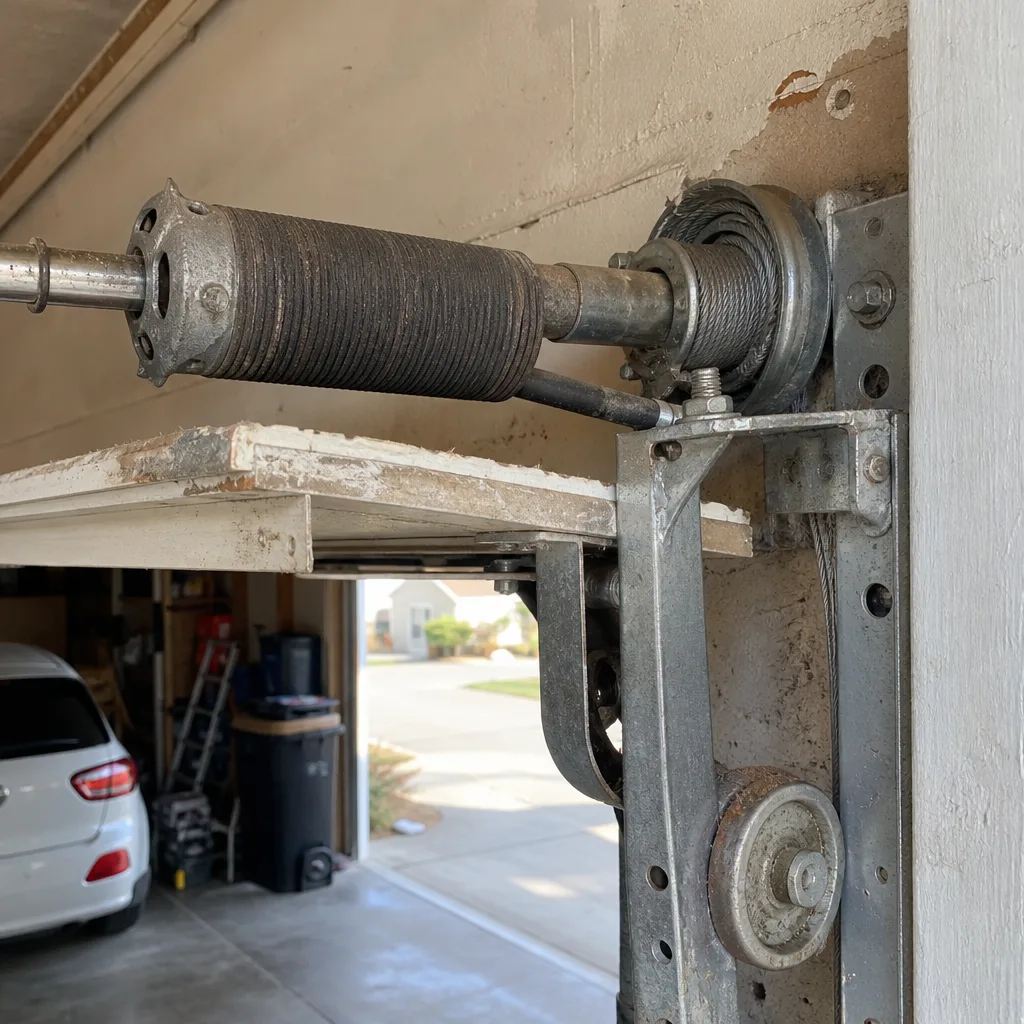 Before
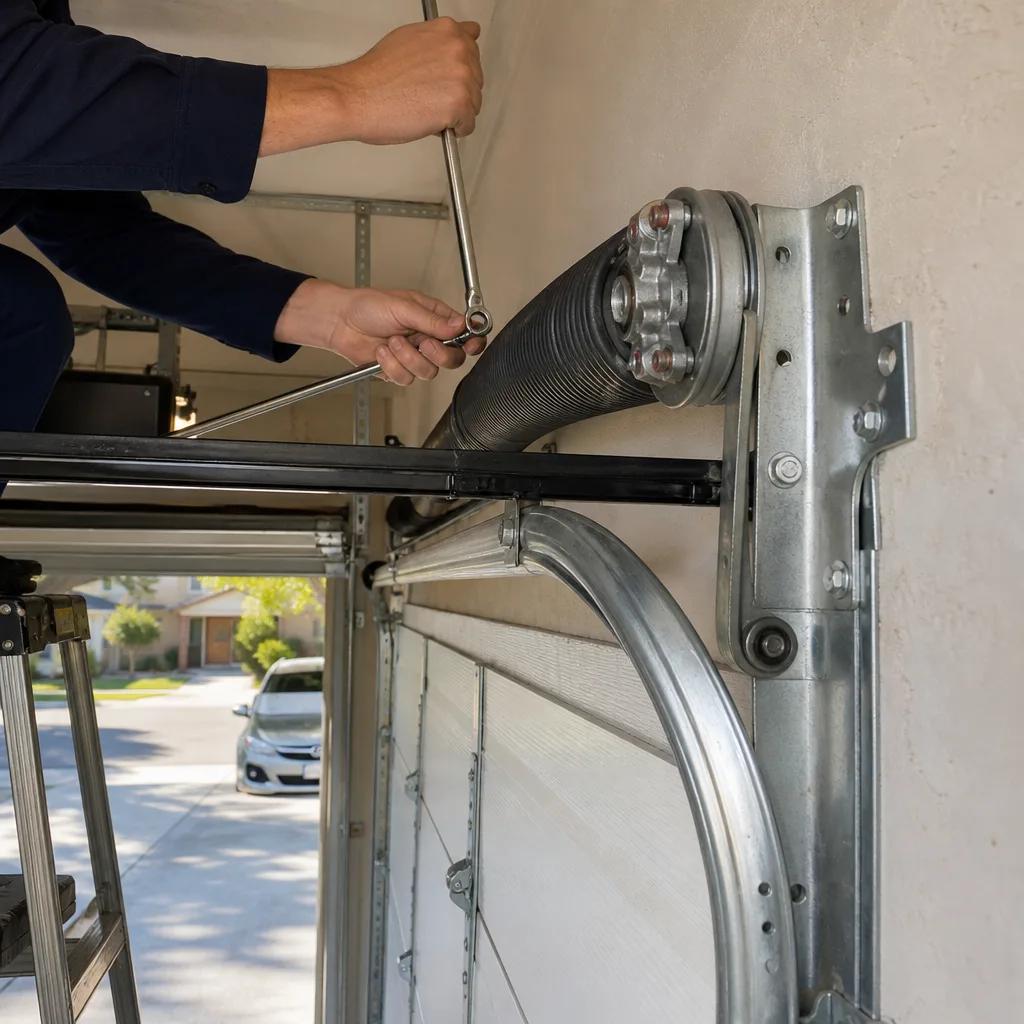 After
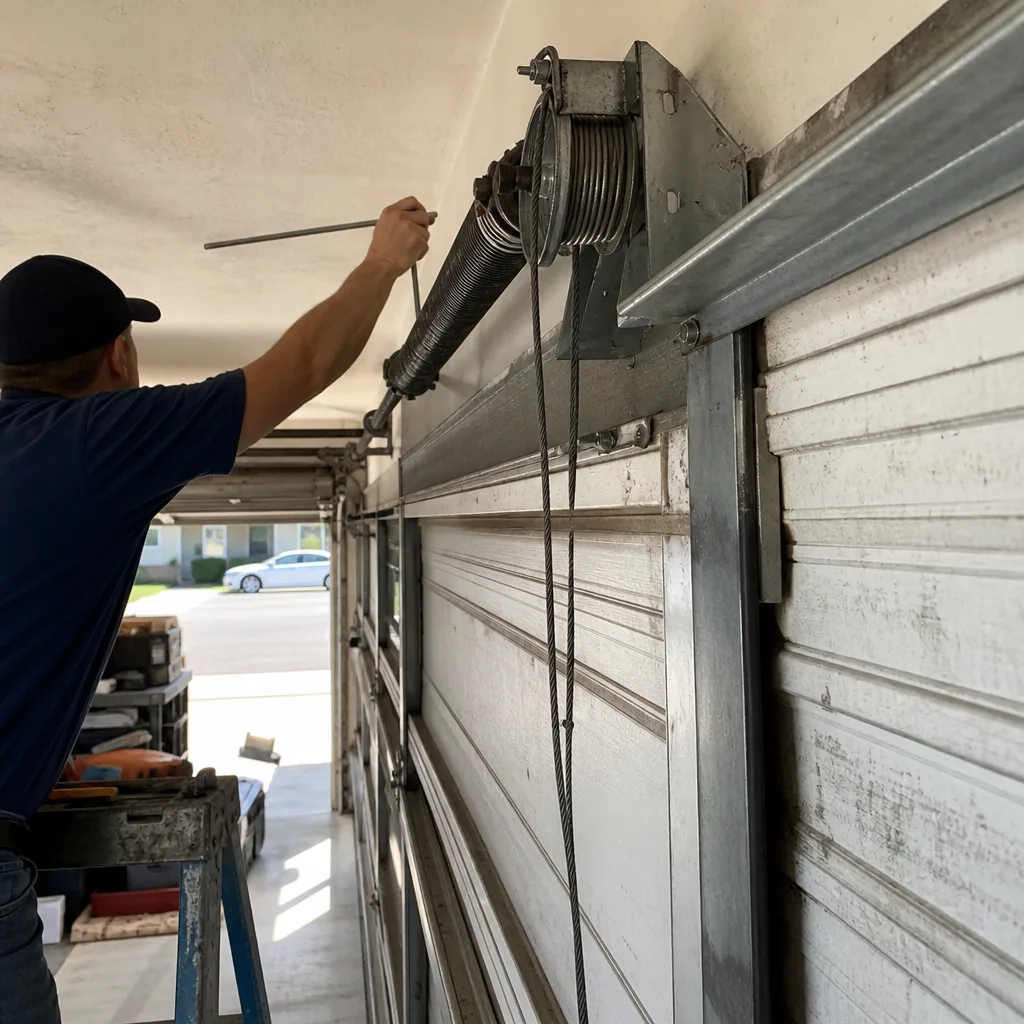 Before
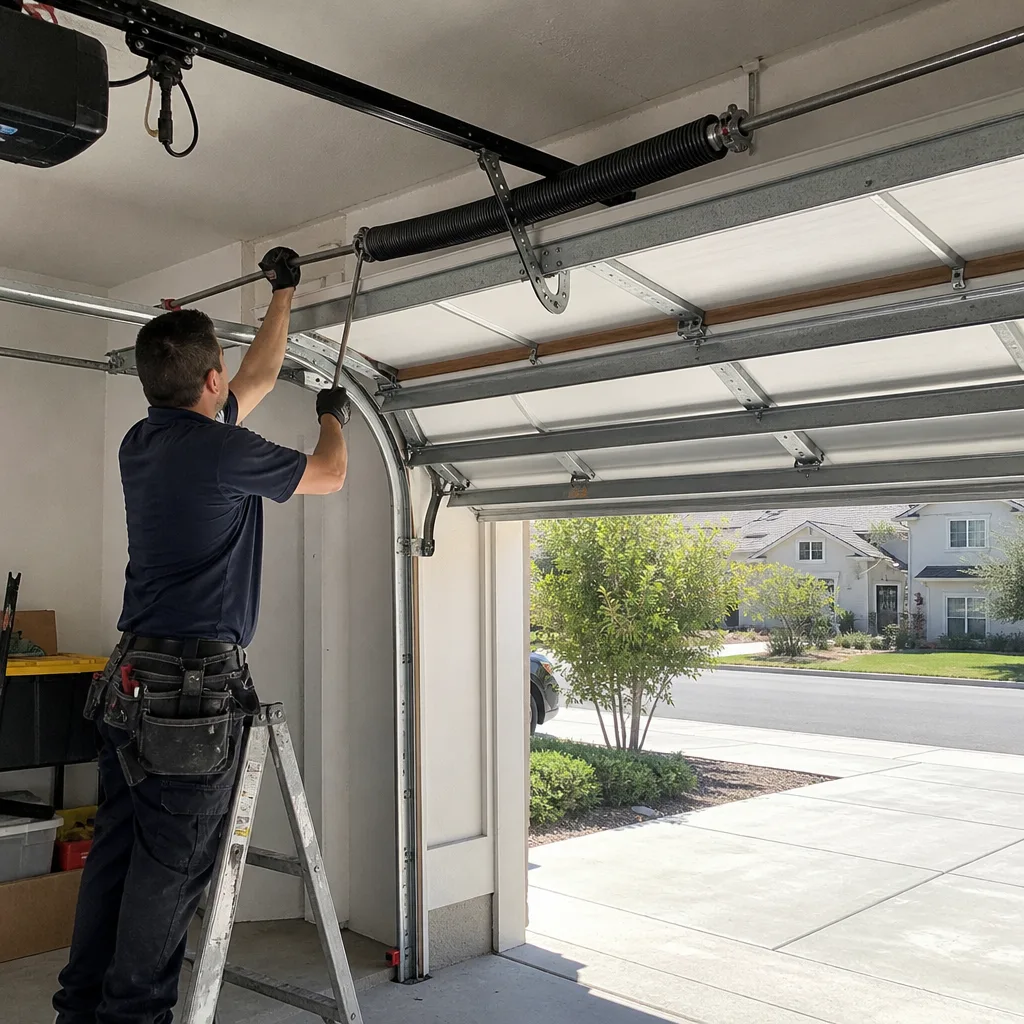 After
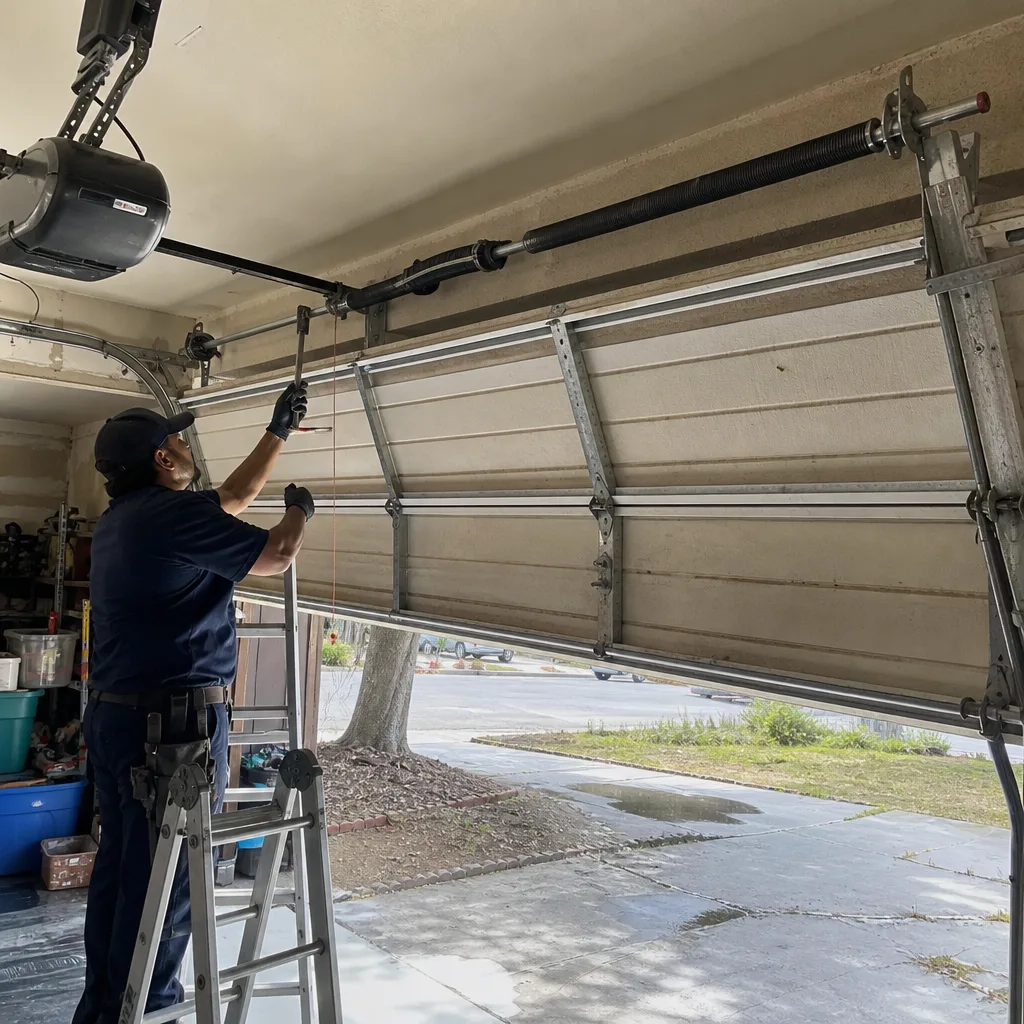 Before
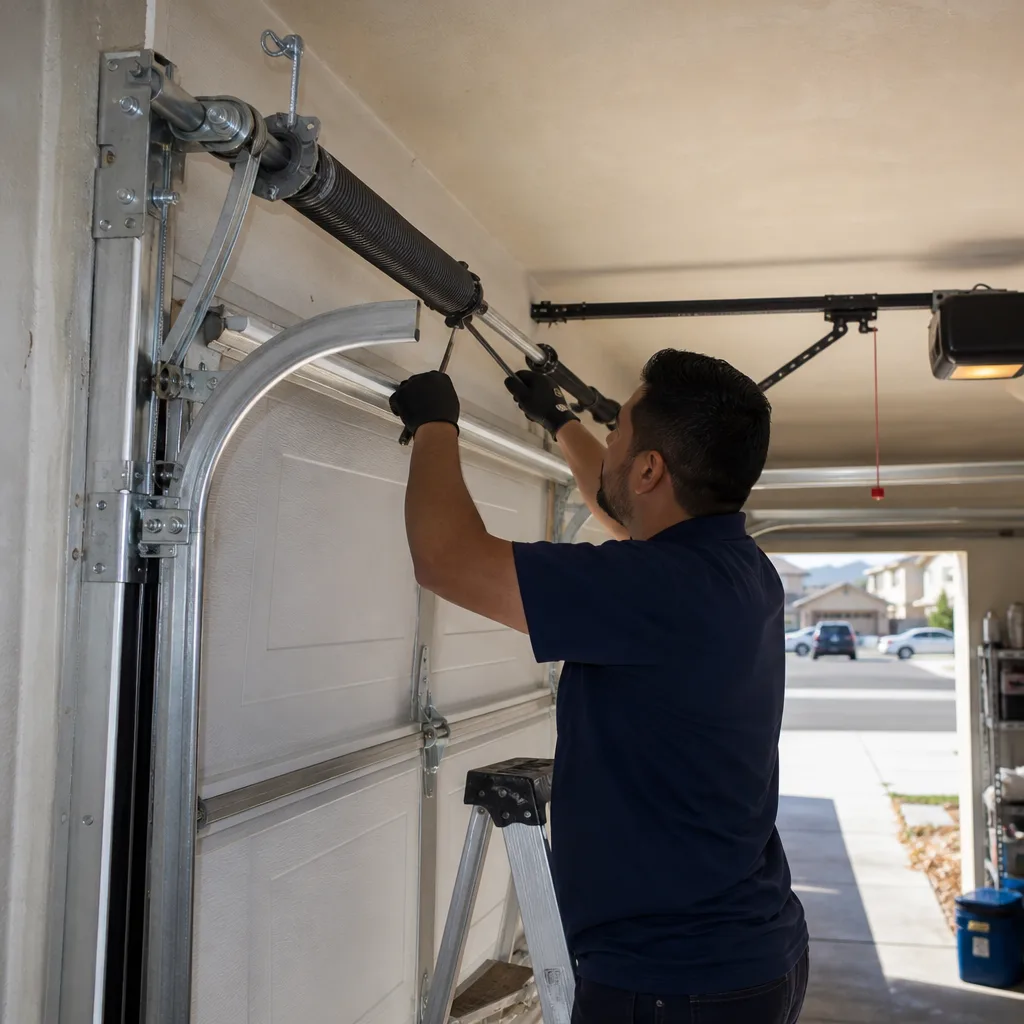 After
When to Call a Professional
If your planned garage door work involves the header, the opening size, or a new electrical circuit, that is professional territory, and it is also permit territory. The two go together. A licensed contractor who does door and opener work in Eastvale regularly will know whether the job crosses the permit threshold, will know what the city inspector expects, and will make sure the door passes the final inspection the first time. If you are replacing a door and cannot tell whether the existing installation is conforming, a professional evaluation is also the right starting point. If you are in Eastvale and want a clear answer about whether your job needs a permit, Garage Door Service Eastvale offers free estimates in Eastvale, and we will tell you the straight answer without upselling. Call (833) 593-6405.
Frequently Asked Questions
No permit is required to replace a garage door with a same-size door on the existing opening and track, unless the job involves structural header changes, opening-size changes, or new electrical work. The City of Eastvale follows the California Residential Code exemption for same-size door replacement, and most door swaps are permit-free in Eastvale.
Permits are required in Eastvale for widening or changing the garage door opening, repairing or replacing the structural header, installing a new electrical circuit for a garage door opener, converting a carport to a garage, or replacing a fire-rated door on an attached garage with a non-rated model. Call the Eastvale Building & Safety Division to confirm your specific scope.
Permit fees in Eastvale and the rest of Riverside County vary by job value and scope. Simple over-the-counter permits for opening changes typically run in the low hundreds of dollars, while full carport-to-garage conversions cost more because of plan review and added electrical review. Call us at (833) 593-6405 for guidance on your specific job, and we will help you estimate the permit cost.
Unpermitted work must be disclosed on the California Transfer Disclosure Statement, and failure to disclose it is a basis for a buyer lawsuit after closing. A buyer’s home inspector may flag the unpermitted door during escrow, and the sale can stall or fail unless the work is retrofit-inspected or corrected.
Most California home insurance policies exclude coverage for losses related to unpermitted work. If an unpermitted door fails and causes property damage or injury, the insurer can deny the claim. A door installed under a permit with a closed final inspection carries no such risk.
Yes. When a garage door fails its Eastvale inspection, the issues are usually spring cables, opener auto-reverse, or fire-rating documentation. Our team at Garage Door Service Eastvale works on LiftMaster, Chamberlain, Genie, Clopay, Amarr, Wayne Dalton, Craftsman, and Raynor systems, and we bring doors up to the code standard the inspector is checking. Call (833) 593-6405 to schedule.
The Bottom Line
The California permit rules for garage doors are simpler than the folklore around them. Same-size replacement, spring work, panel swaps, and opener replacement on an existing circuit are exempt. Structural openings, header work, new circuits, and carport conversions are not. In Eastvale, the permit counter will confirm your scope in minutes, and the final inspection verifies the things a homeowner wants verified anyway: contained springs, auto-reverse openers, and fire separation on attached garages. If the work crosses the permit line, the cost of the permit is far less than the exposure an unpermitted job creates at claim time and at sale time. When in doubt, get a clear answer from a professional who works in Eastvale every day. We are at Garage Door Service Eastvale home, and our Garage Door Opener Repair in Eastvale and installation teams are available at (833) 593-6405.
Written by the team at Garage Door Service Eastvale, serving Eastvale since 2012.